


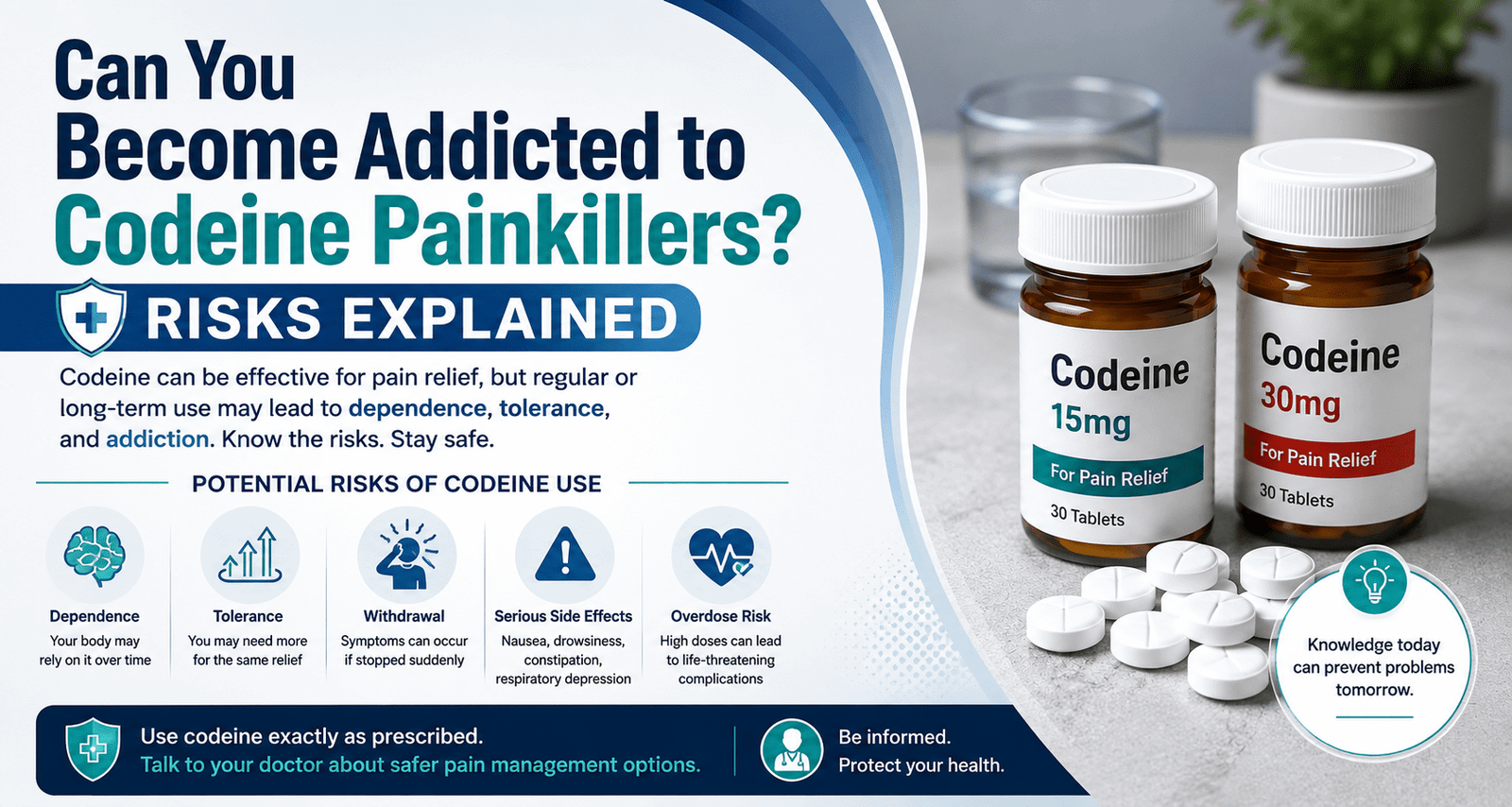
Worried about dependency from regular use of common medications? You are not alone. Codeine is an opioid painkiller that can be prescribed for pain and is also found in some combination medicines. Although codeine can be useful when taken exactly as directed, it can also cause tolerance, physical dependence, and addiction.
The important point is that dependence and addiction are not exactly the same thing. A person can become physically dependent on codeine after regular use without developing an addiction. However, because codeine is an opioid, continued or inappropriate use can lead to opioid use disorder and potentially dangerous overdose.
Can Codeine Painkillers Be Addictive?
Yes. Codeine can be addictive because it is an opioid that affects the brain’s reward and pain-processing systems.
Codeine may produce pain relief, drowsiness, and other effects. With repeated exposure, the body can adapt to the medication. Some people may develop tolerance, meaning the same amount no longer produces the same effect. Physical dependence can also develop, causing withdrawal symptoms when the medication is suddenly reduced or stopped.
Addiction, more accurately described as opioid use disorder (OUD), involves compulsive use and difficulty controlling use despite negative consequences. Therefore, simply experiencing withdrawal after taking codeine does not automatically mean someone is addicted.
Codeine Dependence vs. Codeine Addiction
These terms are often confused.
Physical dependence means the body has adapted to codeine. If regular use is suddenly stopped, withdrawal symptoms can occur. These may include anxiety, restlessness, sweating, runny nose, difficulty sleeping, nausea, diarrhea, stomach cramps, and muscle aches.
Addiction or opioid use disorder involves a pattern of compulsive drug use. Someone may continue taking codeine even when it is causing problems with health, work, relationships, or daily life.
A person taking prescribed codeine exactly as directed can still develop physical dependence. That does not necessarily mean they have an addiction.
What Are Codeine 15mg and Codeine 30mg?
Codeine Phosphate 15mg a Codeine Phosphate 30mg refer to the amount of codeine contained in a dose of a medication. They are different strengths and should not be treated as interchangeable.
A 30mg dose contains twice as much codeine as a 15mg dose. However, this does not mean that someone should automatically take two 15mg tablets instead of one 30mg tablet, or increase a dose because the lower strength does not seem effective. The correct dose depends on the specific medicine, the person’s circumstances, other ingredients in combination products, and the prescriber’s instructions.
Codeine is also available in combination with other medicines, including acetaminophen. This makes it particularly important to check the complete label rather than looking only at the codeine strength.
Never increase your codeine dose without medical advice. Taking more than prescribed or taking it more frequently can increase the risk of serious side effects, dependence, and overdose.
How Does Regular Codeine Use Lead to Dependence?
Opioids can change how the brain and nervous system respond to repeated exposure. Over time, the body may become accustomed to the presence of the medicine.
Three concepts are especially important:
1. Tolerance
Tolerance occurs when the same dose produces less of an effect than it previously did. A person may feel tempted to take more codeine to achieve the original effect.
Increasing the dose without medical supervision can be dangerous because opioid-related breathing problems can become life-threatening.
2. Physical Dependence
Physical dependence occurs when the body adapts to regular opioid exposure. Stopping suddenly after prolonged use can produce withdrawal symptoms.
For people who have taken codeine for several weeks or longer, healthcare professionals may recommend gradually reducing the dose rather than stopping suddenly.
3. Addiction
Addiction involves more than physical dependence. It can involve strong cravings, loss of control over use, continued use despite harm, and spending substantial time obtaining or using the drug.
This distinction matters because a patient can be dependent on codeine without being addicted.
Signs That Codeine Use May Be Becoming a Problem
Possible warning signs include:
- Taking codeine more often or in larger amounts than prescribed
- Feeling unable to cut down or stop
- Strong cravings for codeine
- Taking someone else’s medication
- Using codeine for reasons other than its intended medical purpose
- Continuing to use it despite physical, emotional, financial, or relationship problems
- Becoming preoccupied with obtaining the medication
- Experiencing withdrawal symptoms when a dose is missed
These signs do not prove that someone has an opioid use disorder, but they are reasons to speak with a healthcare professional.
Is Codeine Safe When Taken as Prescribed?
Prescription opioids can be appropriate for pain management when used according to a healthcare professional’s instructions. However, “prescribed” does not mean “risk-free.”
Codeine can cause drowsiness and respiratory depression. The risk of serious breathing problems can increase when the dose is increased or when codeine is combined with certain other medicines, alcohol, or illicit drugs.
People should tell their doctor and pharmacist about all medications, supplements, and substances they use. This helps healthcare professionals identify potentially dangerous interactions.
Can You Become Addicted Even If You Take Codeine for Pain?
Yes, addiction can occur even when an opioid was originally prescribed for legitimate pain.
However, the risk is different from person to person. Factors such as the duration of treatment, medication use patterns, previous substance-use problems, and individual biology can influence risk.
The safest approach is to use codeine only as directed, avoid taking extra doses, never share medication, and discuss concerns about tolerance or dependence with a healthcare professional.
What Happens If You Stop Codeine Suddenly?
Someone who has taken codeine regularly for an extended period may experience withdrawal if they suddenly stop.
Withdrawal can include:
- Anxiety or irritability
- Restlessness
- Sweating
- Runny nose
- Yawning
- Sleep problems
- Nausea or vomiting
- Diarrhea
- Stomach cramps
- Muscle aches
- Increased heart rate
Because withdrawal can be uncomfortable, people who have been taking codeine regularly should speak with their healthcare provider before stopping. A clinician may recommend a gradual reduction in dosage.
What Are the Signs of a Codeine Overdose?
Codeine overdose can cause slow, shallow, or difficult breathing, extreme drowsiness, inability to wake up, weakness, cold or clammy skin, and other serious symptoms.
An opioid overdose is a medical emergency. If someone taking codeine cannot be awakened, has a seizure, collapses, or has trouble breathing, call 911 immediately in the United States.
Naloxone can reverse the life-threatening effects of an opioid overdose when administered promptly. People who take opioids can ask a healthcare professional or pharmacist whether they should have naloxone available and learn how to recognize an overdose.
How Can You Reduce the Risk of Codeine Dependence?
Several practical steps can reduce risk:
- Take codeine exactly as prescribed.
- Do not increase the dose on your own.
- Do not take it more frequently than directed.
- Do not share codeine with another person.
- Tell your doctor about other medicines and substances you use.
- Avoid alcohol and other substances that can increase sedation or breathing problems unless your healthcare professional specifically advises otherwise.
- Ask your healthcare provider if you are concerned about tolerance or dependence.
- Do not abruptly stop long-term regular use without medical guidance.
The Bottom Line
Yes, you can become addicted to codeine painkillers. Codeine is an opioid, so regular use can result in tolerance and physical dependence, while some people can develop opioid use disorder. Codeine 15mg and Codeine 30mg are different strengths, and taking a higher strength or increasing the amount without medical guidance can increase the risk of adverse effects, dependence, and overdose.
Physical dependence does not automatically mean addiction. If you are worried that you are becoming dependent on codeine, experiencing withdrawal, needing increasingly more medication, or struggling to control your use, talk with a healthcare professional rather than attempting to manage the problem alone.
Medical disclaimer: This article is for general educational purposes and is not a substitute for individualized medical advice, diagnosis, or treatment. Always follow the instructions provided by your doctor or pharmacist for any codeine-containing medicine.
Explore Related Topics About Codeine
Want to learn more about codeine? Explore our related guides covering codeine detection times, side effects, dosage, drug interactions, safety precautions, and other important topics to help you make informed decisions about your health.
How Long Does Codeine Take to Work for Pain?
Does Codeine Show Up the Same as Heroin on Drug Tests?
Can You Take Codeine While Pregnant?
Can Codeine Painkillers Be Addictive?
Why Did My Doctor Recommend Codeine Instead of Other Pain Relief?
Is It Illegal to Buy Codeine Painkillers Online in Europe?
Can You Drink Alcohol While Taking Codeine?
What Should You Tell Your Employer About Codeine Use?
How Do You Know If You’re Taking Too Much Codeine?
Why Do Some Painkillers Contain Codeine and Others Don’t?
Can You Buy Codeine Without a Prescription Anywhere?
Can Codeine Cause False Positive Drug Tests?
What Are the Side Effects of Taking Codeine?
What Should You Know Before Your First Codeine Dose?
How Long Does Codeine Stay in Your System? Detection Times
Is Codeine Prescription or Over-the-Counter?
What Does Codeine Do to Your Body?
Can Codeine Painkillers Affect Your Ability to Drive?
Why Is Codeine in My Painkillers?
Understanding Ibuprofen and Codeine
Can You Take Codeine With Paracetamol?
Can You Travel with Codeine Medication Across Borders?


