


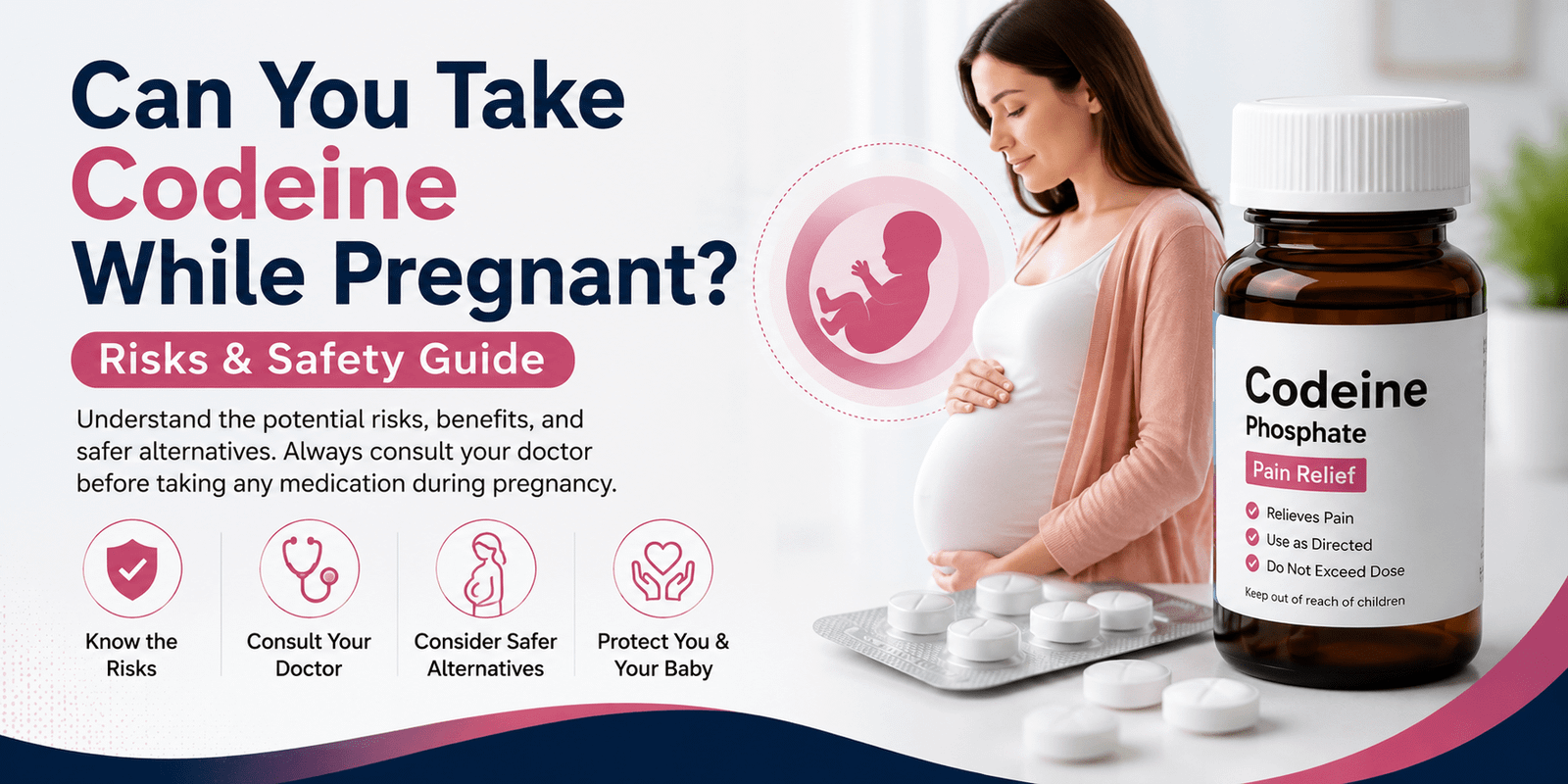
Codeine can sometimes be prescribed during pregnancy when a healthcare professional decides that the benefits outweigh the potential risks. However, it should not be taken during pregnancy without medical advice. The dose, duration of treatment, stage of pregnancy, reason for taking it, and other medicines being used all matter.
Codeine is an opioid medicine used primarily for pain relief and, in some products, to reduce coughing.
If you are pregnant and have been prescribed codeine, do not stop or change the dose on your own. Speak with your doctor, obstetrician, midwife, or pharmacist about whether you should continue taking it.
What Is Codeine?
Codeine is an opioid medication that affects the way the brain and nervous system perceive pain. It can be prescribed for certain types of mild-to-moderate pain and is also used in some medicines to control cough.
Codeine may be available by itself or combined with other medicines, such as acetaminophen/paracetamol. Therefore, it is important to check the complete ingredients of any medicine you are taking.
Because codeine is an opioid, repeated use can lead to physical dependence and, in some people, opioid use disorder.
Can You Take Codeine While Pregnant?
Codeine is not automatically prohibited during pregnancy, but it should only be used when recommended or prescribed by a healthcare professional.
According to the American College of Obstetricians and Gynecologists (ACOG), opioids prescribed under appropriate medical supervision can be used during pregnancy when clinically indicated, but the potential benefits and risks should be discussed with the patient.
The available research on codeine during pregnancy does not provide a simple “safe” or “unsafe” answer. Some studies have reported a possible small increase in certain birth defects following codeine exposure, while other studies have not found the same associations. Overall, MotherToBaby reports that if there is an increased chance of birth defects from codeine, it is likely to be small.
This means that the decision to use codeine during pregnancy should be individualized rather than based only on the medicine’s name or strength.
Why Might a Doctor Prescribe Codeine During Pregnancy?
A healthcare professional may consider an opioid such as codeine when pain is significant and other treatment options are not adequate or appropriate.
The reason for treatment matters. Codeine may be used for:
- Pain relief
- Certain cough conditions, usually when other appropriate treatments are insufficient
Codeine-containing medicines may also contain other active ingredients, so the safety of the entire medication needs to be considered during pregnancy.
Untreated or poorly controlled pain can also affect a pregnant person’s wellbeing. For this reason, doctors generally weigh the potential risks of the medicine against the consequences of leaving the condition untreated.
Codeine Phosphate 15mg vs 30mg: What Is the Difference?
The main difference between codeine phosphate 15mg y codeine phosphate 30mg is the amount of codeine in each tablet.
| Feature | Codeine phosphate 15mg | Codeine phosphate 30mg |
|---|---|---|
| Active drug | Codeine phosphate | Codeine phosphate |
| Strength | 15mg | 30mg |
| Amount of codeine | Lower | Higher |
| Relative amount | 1 dose unit | 2 times the codeine amount of 15mg |
| Main uses | Pain relief; some codeine products may be used for cough | Pain relief; some codeine products may be used for cough |
| Pregnancy consideration | Requires medical assessment | Requires medical assessment |
A 30mg tablet contains twice as much codeine phosphate as a 15mg tablet. The two strengths are not different types of codeine; they are different dose strengths of the same active ingredient.
The appropriate strength and dosing schedule depend on the individual’s medical condition and the prescriber’s instructions. A prescribing document for codeine phosphate 15mg and 30mg tablets lists these strengths for symptomatic treatment of mild-to-moderate pain and, in appropriate circumstances, certain nonproductive coughs.
Do not switch from 15mg to 30mg, take additional tablets, or change the dosing interval without medical advice.
Does Codeine Cause Birth Defects?
Research has produced mixed findings.
Some observational studies have reported an association between codeine exposure in early pregnancy and certain birth defects. However, other studies have not confirmed these findings, and researchers have not identified a consistent pattern showing that codeine itself causes a particular group of birth defects. MotherToBaby states that, if there is an increased risk, it is likely to be small.
This is important because pregnancy studies involving medicines can be difficult to interpret. People taking codeine may have underlying illnesses, take other medicines, or have other factors that can also influence pregnancy outcomes.
Therefore, taking codeine does not mean that a baby will develop a birth defect.
Can Codeine Affect the Baby Later in Pregnancy?
Potential concerns are not limited to early pregnancy.
Research on opioid exposure during pregnancy has reported associations with outcomes such as poor fetal growth, preterm delivery, and stillbirth. These outcomes are more commonly reported with higher amounts or longer-term opioid exposure, particularly when opioids are misused. The exact risk associated with appropriately prescribed codeine is not always clear.
Codeine use close to delivery can also expose a newborn to opioids. Some babies exposed to opioids during pregnancy can develop neonatal opioid withdrawal, sometimes called neonatal abstinence syndrome (NAS).
Possible newborn withdrawal symptoms include:
- Irritability
- Excessive crying
- Tremors
- Poor feeding
- Vomiting or diarrhea
- Difficulty sleeping
- Excessive sleepiness
- Sweating
- Breathing or other nervous-system problems in severe cases
The likelihood of withdrawal depends on factors such as the opioid dose, duration of exposure, other medicines, gestational age, and the baby’s condition at birth.
What If You Took Codeine Before Realizing You Were Pregnant?
Do not panic. A single or limited exposure does not automatically mean that your pregnancy has been harmed.
If you discover that you are pregnant after taking codeine, tell your healthcare professional:
- The name of the medicine
- The strength, such as 15mg or 30mg
- How many doses you took
- When you took them
- Why you were taking codeine
- Any other medicines or substances you are using
Your healthcare professional can determine whether you need additional monitoring or a change in treatment.
MotherToBaby specifically advises people to discuss medication changes with their healthcare providers rather than making changes independently.
Should You Stop Codeine Immediately During Pregnancy?
Do not make a sudden change to a regularly used prescription without speaking with your healthcare professional.
If you have been taking codeine regularly, your body may have developed physical dependence. Your doctor can determine whether the medicine should be continued, reduced gradually, or replaced with another treatment.
ACOG recommends discussing the risks and benefits of opioid treatment during pregnancy and taking prescribed opioids only as directed.
What About Codeine for Cough During Pregnancy?
Codeine is used in some medicines to reduce coughing, but pregnancy is a reason to discuss cough treatment with a healthcare professional before taking it.
A cough may result from a minor infection, asthma, allergies, reflux, or another condition that requires different treatment. Treating the underlying cause may be more appropriate than suppressing the cough with an opioid.
The FDA identifies codeine as an opioid pain reliever that is also used, generally in combination with other medicines, to reduce coughing.
What About Codeine While Breastfeeding?
Pregnancy and breastfeeding involve different safety considerations.
Codeine passes into breast milk, and some infants have experienced excessive sleepiness, feeding difficulties, breathing problems, and other opioid-related effects. The FDA recommends against breastfeeding while using codeine because of the potential for serious adverse effects in breastfed infants.
If you have recently delivered a baby and are taking codeine, discuss your medication with your healthcare professional before breastfeeding or making changes to your treatment.
When Should You Contact Your Doctor?
Contact your healthcare professional before taking codeine if you are pregnant or trying to become pregnant.
Seek prompt medical advice if:
- You accidentally took more codeine than prescribed.
- You are taking codeine regularly and have just discovered you are pregnant.
- You are considering increasing from 15mg to 30mg.
- You are taking another medicine containing an opioid.
- You are taking a codeine combination product and are unsure about its ingredients.
- Your pain or cough is worsening or persistent.
- You feel unusually sleepy, confused, dizzy, or have difficulty breathing after taking codeine.
If you have severe difficulty breathing, cannot stay awake, or have another medical emergency, seek emergency medical care immediately.
Key Takeaway
Can you take codeine while pregnant? Sometimes, but only when a healthcare professional determines that it is appropriate.
Codeine is an opioid used for pain relief and, in some products, cough suppression. Codeine phosphate 15mg and 30mg contain the same active drug, but the 30mg strength contains twice the amount of codeine phosphate as the 15mg strength.
The potential effects of codeine during pregnancy depend on the dose, duration, timing of exposure, reason for treatment, and other individual factors. If you are pregnant and have taken or have been prescribed codeine, talk with your healthcare professional before changing your medication.
Explore Related Topics About Codeine
Want to learn more about codeine? Explore our related guides covering codeine detection times, side effects, dosage, drug interactions, safety precautions, and other important topics to help you make informed decisions about your health.
How Long Does Codeine Take to Work for Pain?
Does Codeine Show Up the Same as Heroin on Drug Tests?
Can Codeine Painkillers Be Addictive?
Why Did My Doctor Recommend Codeine Instead of Other Pain Relief?
Is It Illegal to Buy Codeine Painkillers Online in Europe?
Can You Drink Alcohol While Taking Codeine?
What Should You Tell Your Employer About Codeine Use?
How Do You Know If You’re Taking Too Much Codeine?
Why Do Some Painkillers Contain Codeine and Others Don’t?
Can You Buy Codeine Without a Prescription Anywhere?
Can Codeine Cause False Positive Drug Tests?
What Are the Side Effects of Taking Codeine?
What Should You Know Before Your First Codeine Dose?
How Long Does Codeine Stay in Your System? Detection Times
Is Codeine Prescription or Over-the-Counter?
What Does Codeine Do to Your Body?
Can Codeine Painkillers Affect Your Ability to Drive?
Can You Become Addicted to Codeine Painkillers?
Why Is Codeine in My Painkillers?
Understanding Ibuprofen and Codeine
Can You Take Codeine With Paracetamol?
Can You Travel with Codeine Medication Across Borders?


