


Introduction
Lysergic acid diethylamide (LSD) is a potent, semi-synthetic psychedelic substance belonging to the chemical class of ergolines and tryptamines. First synthesized in a laboratory setting in the mid-20th century, LSD is widely recognized for its capacity to induce profound alterations in human consciousness, perception, and thought processes. Unlike many other classical hallucinogens that occur naturally in plants or fungi (such as psilocybin or mescaline), LSD requires specialized laboratory synthesis, making its production complex and heavily restricted under global drug control treaties.
What Is LSD (Lysergic Acid Diethylamide)?
Understanding what is LSD requires a balanced examination of its chemical structure, extreme molecular potency, standard physical formats, and pharmacological behavior within the human body. This pillar article presents an objective, science-based overview of the basic lysergic acid diethylamide facts, addressing public health questions with rigorous data from peer-reviewed literature and government health agencies.
The Chemical Origins: From Ergot Fungus to the Laboratory
LSD is a semi-synthetic compound derived from lysergic acid. Lysergic acid itself is found naturally in ergot (Claviceps purpurea), a parasitic fungus that grows on cereal grains, primarily rye.
[Ergot Fungus on Rye] ──> [Extraction of Lysergic Acid] ──> [Chemical Synthesis] ──> [LSD-25]
In a laboratory environment, chemical precursors extracted from ergot are modified to form the diethylamide variant. Structurally, LSD contains an indole ring core—a characteristic it shares with endogenous neurotransmitters like serotonin (5-hydroxytryptamine or 5-HT). It is this precise molecular configuration that allows the substance to bind tightly to specific neuroreceptors, even when introduced to the body in miniscule amounts.
Extreme Molecular Potency and Dosing Metrics
One of the most notable LSD facts is its extreme biological potency compared to almost all other psychoactive substances. While substances like alcohol or caffeine are measured in grams or milligrams, LSD is measured in micrograms (
μmu𝝁g), which are millionths of a gram.
- Threshold Dose: The minimum amount required to produce noticeable psychoactive alterations is roughly 10 to 20 micrograms.
- Standard Potency: A typical single dose used in clinical trials or reported in historical psychiatric research ranges from 20 to 100 micrograms.
- High Potency: Doses exceeding 200 micrograms significantly escalate the intensity of perceptual distortions and increase the statistical likelihood of acute adverse psychological reactions.
Because the active quantity is microscopic, it is virtually impossible to accurately measure or safely handle pure crystalline LSD without advanced laboratory equipment, creating immense risk of accidental overexposure or contamination in unregulated environments.
Common Physical Forms and Formats
In illicit manufacturing and historical clinical distributions, pure LSD exists as a clear or white, odorless, and water-soluble crystalline powder. To facilitate handling and distribution of microscopic microgram doses, the crystalline material is dissolved in a solvent and applied to various transport mediums.
Blotter Paper
- Mechanism: The most prevalent format. Liquid LSD solution is uniformly absorbed onto sheets of absorbent, perforated paper.
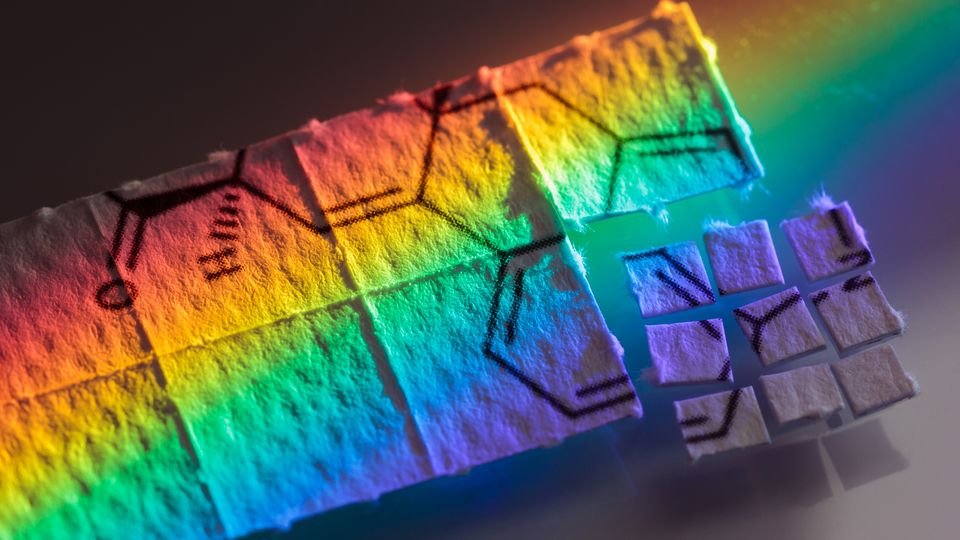
- Characteristics: The sheets are typically printed with graphic designs and torn along perforations into individual small squares (tabs), each representing a single estimated dose.
- Risk: Due to the total lack of quality control in illicit production, the actual microgram content of individual tabs can vary widely, introducing significant unpredictability.
Liquid Solution
- Mechanism: Crystalline LSD dissolved in distilled water or pure ethanol.
- Characteristics: Usually distributed in small amber glass vials to protect the molecule from light degradation.
- Risk: Dropper bottles present a high risk of accidental dosing errors, as a slight drop size variance can multiply the consumed microgram amount exponentially.
Tablets and Gelatin Squares (Gel Tabs)
- Mechanism: Tiny pressed pills, historically referred to as “microdots,” or small squares of solidified gelatin mixed with the substance.
- Characteristics: Gel tabs protect the active compound from air and moisture degradation longer than paper.
- Risk: Frequently counterfeited or substituted with cheaper, highly toxic novel synthetic research chemicals (such as NBOMe compounds).
Pharmacokinetics: Onset, Peak, and Duration
The pharmacokinetic profile of LSD determines how the human body processes the substance from ingestion to elimination. When taken orally, the molecule is rapidly absorbed through the gastrointestinal tract and distributed throughout the bloodstream to the brain.
| Phase of Action | Timeframe Post-Ingestion | Physiological and Behavioral Description |
|---|---|---|
| Initial Onset | 20 – 90 minutes | Subtle changes in visual perception; mild physical alterations such as slight elevation in heart rate or body temperature. |
| The Peak | Maximum concentration in brain tissue; intense alterations in sensory processing, cognitive flow, and spatial awareness. | |
| Comedown | Gradual reduction in sensory distortions; returning baseline cognitive control; potential feelings of mental exhaustion. | |
| Total Duration | The full window of acute psychoactivity. Residual effects or difficulty sleeping can persist for up to 24 hours. |
Comparing LSD to Other Classical Psychedelics
While LSD belongs to the broader class of classical psychedelics, it possesses distinct structural and behavioral properties that separate it from naturally occurring compounds.
                  ┌───────────────────────────────┐
                  │     Classical Psychedelics    │
                  └───────────────┬───────────────┘
         ┌────────────────────────┼────────────────────────┐
         ▼                        ▼                        ▼
  ┌─────────────┐          ┌─────────────┐          ┌─────────────┐
  │     LSD     │          │ Psilocybin  │          │  Mescaline  │
  └──────┬──────┘          └──────┬──────┘          └──────┬──────┘
   • Semi-synthetic         • Natural (Fungi)        • Natural (Cactus)
   • 8-12 hr duration       • 4-6 hr duration        • 10-14 hr duration
   • Microgram scale        • Milligram scale        • Milligram scale
Myths vs. Facts: Clearing Misconceptions
Myth: LSD remains permanently in the spinal cord.
- The Fact: This is a persistent cultural myth with zero basis in human anatomy or pharmacology. LSD is rapidly metabolized by the liver into inactive compounds (such as 2-oxo-3-hydroxy-LSD) and excreted completely via urine within a few days.
Myth: LSD causes physical dependence and withdrawal.
- The Fact: According to the National Institute on Drug Abuse (NIDA), LSD is not physically addictive. It does not cause compulsive drug-seeking behavior or physical withdrawal symptoms upon cessation. However, the body builds a rapid, short-term tolerance to the substance; taking it repeatedly within a few days yields virtually no psychoactive effect.
Myth: Psychological risks are non-existent if the user is careful.
- The Fact: While physical addiction is absent, profound acute psychological risks are well-documented. Panic reactions, profound confusion, temporary paranoia, and accidental injuries due to impaired judgment pose significant real-world dangers.
FAQs: Common Analytical Questions
Is LSD legal for any purpose?
In the vast majority of international jurisdictions, LSD is classified as a Schedule I controlled substance. This classification means it is legally defined as having a high potential for abuse and no currently accepted, widespread medical use, making its manufacture, possession, and sale strictly illegal. Limited exceptions exist exclusively for approved clinical research trials.
Can a laboratory test detect LSD?
Yes. Although it leaves the system quickly, specialized toxicological tests, including High-Performance Liquid Chromatography (HPLC) and Mass Spectrometry, can detect LSD and its metabolites in urine samples for roughly 24 to 72 hours after ingestion.


