


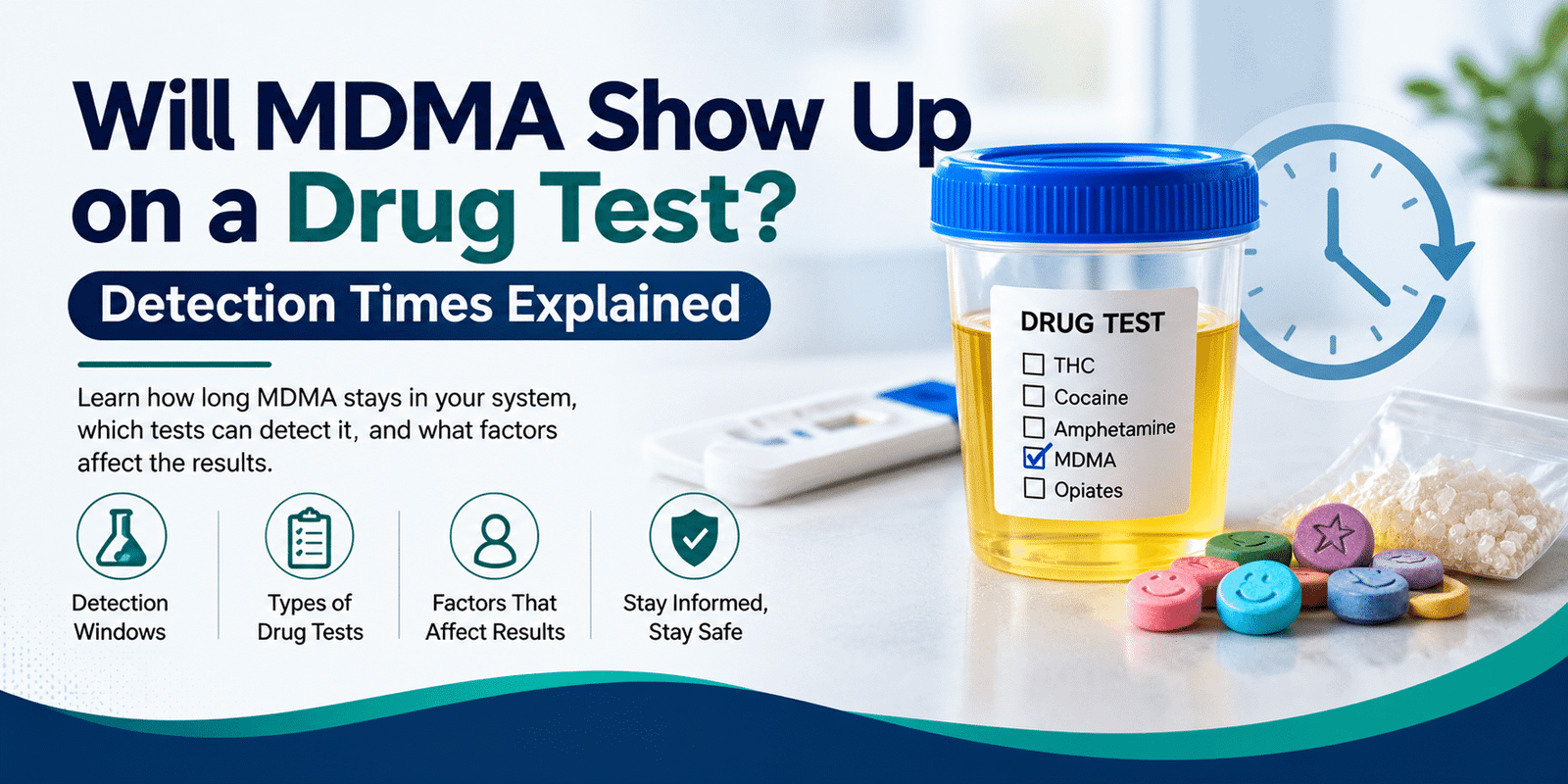
Yes, MDMA can show up on a drug test, but whether it is detected depends on the type of test being used, the substances included in the testing panel, the timing of the test, and individual factors.
MDMA, short for 3,4-methylenedioxymethamphetamine, is also commonly known as ecstasy ar molly. It is a psychoactive drug with stimulant and hallucinogenic effects. Modern laboratory testing can specifically identify MDMA and its major active metabolite, MDA.
However, not every drug test automatically tests for MDMA. Some basic drug screens focus on a limited group of substances, while expanded panels may specifically include MDMA or related compounds. This means a person cannot determine whether MDMA will be detected simply by knowing that a drug test is being performed.
Can a Standard Drug Test Detect MDMA?
It depends on the test panel.
Some standard drug screens do not specifically include MDMA. Other expanded or specialized panels can test for MDMA directly.
For example, U.S. federal workplace testing programs include MDMA and MDA within the amphetamine category. Federal workplace testing may use urine or oral-fluid specimens, and laboratories analyze specimens according to established testing procedures.
Therefore, the most important question is not simply, “Will a drug test detect MDMA?” but rather:
“Does the specific drug-testing panel include MDMA?”
How Long Can MDMA Be Detected?
Detection time varies according to the specimen being tested and individual circumstances.
According to guidance published by the Substance Abuse and Mental Health Services Administration (SAMHSA), MDMA or MDA can generally be detected in urine for about 1–2 days. MDMA and MDA can also appear in oral fluid within hours of use.
These figures are general estimates rather than guarantees. Detection can vary because of factors such as metabolism, dose, frequency of use, the type of test, laboratory methods, and the sensitivity or cutoff used by the testing program.
MDMA Detection by Test Type
| Test type | General detection information |
|---|---|
| Urine | MDMA or MDA may generally be detectable for about 1–2 days. |
| Oral fluid (saliva) | MDMA and MDA can appear within hours; the detection period depends on the testing method. |
| Blood | Detection is generally associated with a shorter window than many other specimen types. |
| Hair | Hair testing can provide a longer historical detection window, but availability and testing practices vary. |
The exact detection period cannot be predicted with certainty for an individual.
Does MDMA Show Up as Amphetamine?
MDMA belongs to the amphetamine family of substances, but drug-test reporting depends on the testing method.
In federally regulated U.S. workplace testing, MDMA and MDA are included in the amphetamine category. More specialized laboratory testing can identify the specific compounds being tested rather than simply reporting a broad drug category.
This distinction matters because different drug-testing panels use different analytes and testing procedures.
Can MDMA Cause a False Positive?
Initial drug screens can sometimes produce presumptive positive results because screening tests are designed to identify certain chemical patterns. A presumptive positive result is not necessarily the final determination.
When required, laboratory confirmation uses more specific analytical methods. SAMHSA notes that laboratory testing and Medical Review Officer procedures are used to help ensure the accuracy and appropriate interpretation of federally regulated workplace drug-test results.
If a drug test produces a result that you believe is incorrect, the appropriate response is to ask the testing provider or Medical Review Officer about the confirmation process rather than assuming the initial screening result is definitive.
Does Every Workplace Drug Test Include MDMA?
No. Drug-testing programs differ in what substances they test for.
Federal workplace testing in the United States includes MDMA and MDA within its regulated amphetamine testing category. However, private employers and other organizations may use different testing panels depending on their policies, applicable laws, and testing providers.
For that reason, someone preparing for a drug test should check the testing policy or ask the organization conducting the test which substances are included.
What Factors Affect MDMA Detection?
Several factors can influence whether MDMA is detected, including:
- The type of specimen collected
- The specific testing panel
- The time between use and testing
- Individual metabolism
- Amount and frequency of use
- Laboratory testing procedures
- The test’s cutoff concentration
- Whether the laboratory performs confirmatory testing
Because these variables differ from person to person, detection-time estimates should be treated as general information rather than a guarantee about an individual test result.
Why Can Two Drug Tests Produce Different Results?
Two tests can produce different results because they may use different specimens, testing panels, analytical methods, and cutoff concentrations.
For example, a urine test and an oral-fluid test do not provide identical detection windows. Similarly, a basic screening panel may not include the same substances as a specialized laboratory panel.
SAMHSA explains that drug-testing programs can use different specimen types and that testing programs determine which substances are included in their panels.
Does a Negative Test Mean MDMA Was Never Used?
No.
A negative drug test means that the substance or metabolite being tested for was not detected at or above the applicable testing threshold in that particular specimen at that particular time.
SAMHSA specifically notes that a negative workplace drug-test result does not establish that a person has never used an illicit drug.
This is an important distinction when interpreting drug-test results.
Key Takeaway
MDMA can show up on a drug test when the testing panel is designed to detect MDMA or related compounds. Urine testing can generally detect MDMA or MDA for approximately 1–2 days, according to SAMHSA guidance, while oral-fluid testing can detect MDMA and MDA within hours. However, detection windows vary and are not guaranteed for any individual.
The type of drug test and the substances included in its testing panel are therefore critical when determining whether MDMA is likely to be detected.
Frequently Asked Questions
1. Will MDMA show up on a drug test?
Yes. MDMA can be detected by drug tests that specifically include MDMA or related compounds in their testing panel.
2. How long does MDMA stay detectable in urine?
SAMHSA guidance states that MDMA or MDA is generally detectable in urine for approximately 1–2 days, although individual results can vary.
3. Does a 5-panel drug test test for MDMA?
Not necessarily. Drug panels vary, so you need to know which substances the specific test includes.
4. Can a saliva test detect MDMA?
Yes. MDMA and its metabolite MDA can appear in oral fluid within hours, although the overall detection period depends on the test and individual factors.
5. Does MDMA show up as amphetamine?
MDMA is an amphetamine-related substance. In U.S. federal workplace testing, MDMA and MDA are included within the amphetamine testing category.
6. Can MDMA cause a false-positive drug test?
An initial screening result can sometimes require confirmation. More specific laboratory testing is used to verify presumptive positive results when applicable.
7. Does a negative drug test prove that someone never used MDMA?
No. A negative result only means the substance or relevant metabolite was not detected at or above the applicable testing threshold in the specimen tested.
8. What determines how long MDMA can be detected?
The specimen type, testing method, cutoff level, timing, metabolism, amount used, and frequency of use can all affect detection.
9. Are MDMA and MDA the same substance?
No. MDMA is metabolized partly into MDA, which is an active metabolite. Both can be relevant to MDMA testing.
10. Can employers test specifically for MDMA?
Yes. Testing programs can include MDMA as a specific analyte or within an amphetamine testing category, depending on the program and applicable rules.
Medical and Testing Disclaimer
This article provides general educational information about MDMA and drug testing. Drug-testing requirements and detection windows can vary by country, employer, laboratory, specimen type, and testing method. For questions about a specific test result, consult the testing provider, laboratory, or an appropriately qualified healthcare professional.


