


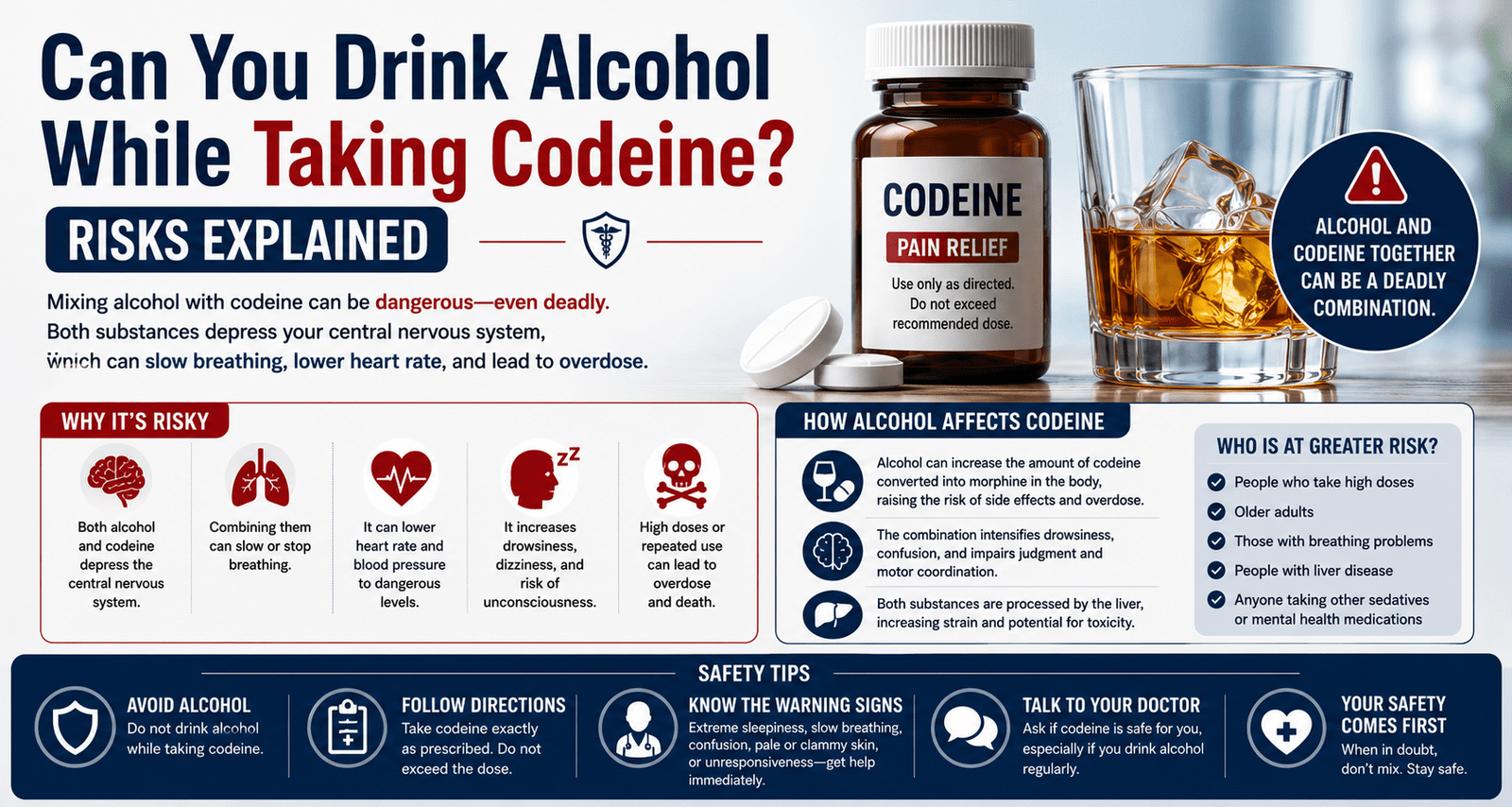
No. Drinking alcohol while taking codeine is generally not considered safe. Alcohol and codeine can both depress the central nervous system, and taking them together can increase drowsiness, dizziness, impaired coordination, dangerously slow breathing, loss of consciousness, coma, and potentially death. The FDA specifically warns that combining codeine with alcohol or other central nervous system depressants can cause profound sedation and respiratory depression.
This interaction can occur even when codeine is taken exactly as prescribed. The risk may be greater with higher doses, larger amounts of alcohol, other sedating medicines, or in people who are particularly sensitive to opioids or alcohol.
Why Is Mixing Codeine and Alcohol Dangerous?
Codeine is an opioid medicine that can slow activity in the brain and nervous system. One of its most important effects is respiratory depression, meaning breathing can become slower or less effective.
Alcohol can also suppress the central nervous system. When the two substances are taken together, their effects can reinforce each other rather than simply adding together. The National Institute on Alcohol Abuse and Alcoholism (NIAAA) explains that alcohol combined with opioids can increase the risk of overdose because both substances can suppress brain systems involved in breathing.
The combination may cause:
- Extreme sleepiness or sedation
- Dizziness and poor coordination
- Confusion or impaired judgment
- Nausea and vomiting
- Low blood pressure
- Slow or shallow breathing
- Difficulty staying awake
- Loss of consciousness
- Coma
- Potentially fatal respiratory depression
Because of these risks, people taking codeine should avoid alcoholic beverages unless their prescribing healthcare professional specifically advises otherwise.
Can You Drink Alcohol With Codeine Phosphate 15 mg?
Codeine phosphate 15 mg should not be combined with alcohol without medical advice.
A 15 mg tablet contains less codeine than a 30 mg tablet, but that does not make alcohol consumption safe. Codeine sensitivity varies considerably between individuals, and the effects can also depend on other medicines, health conditions, previous opioid exposure, and the amount of alcohol consumed.
In other words, 15 mg does not mean “safe with alcohol.” The safer approach is to avoid alcohol while taking codeine.
Can You Drink Alcohol With Codeine Phosphate 30 mg?
Codeine phosphate 30 mg should also not be combined with alcohol.
A 30 mg dose contains twice as much codeine as a 15 mg dose. Consequently, it can produce stronger opioid effects in a person who responds normally to the medicine. Those effects can include sleepiness, dizziness and respiratory depression.
The FDA-approved labeling for codeine sulfate identifies alcohol as a central nervous system depressant that can interact with codeine and increase the risk of profound sedation, respiratory depression, coma, and death.
Codeine Phosphate 15 mg vs. 30 mg: What Is the Difference?
The main difference is the amount of codeine in each tablet.
| Feature | Codeine Phosphate 15 mg | Codeine Phosphate 30 mg |
|---|---|---|
| Codeine amount | 15 mg | 30 mg |
| Relative amount | Lower | Twice the amount of a 15 mg tablet |
| Opioid effects | May produce less opioid effect in some people | May produce stronger opioid effects in some people |
| Alcohol combination | Avoid unless specifically approved by a healthcare professional | Avoid unless specifically approved by a healthcare professional |
| Risk of sedation | Possible | May be greater depending on the individual |
| Appropriate dose | Determined by a healthcare professional | Determined by a healthcare professional |
Current U.S. prescribing information lists codeine sulfate tablets in 15 mg, 30 mg, and 60 mg strengths and recommends starting within an appropriate dosing range and adjusting treatment according to the patient’s response.
Importantly, a higher strength is not necessarily a better treatment. The appropriate dose depends on factors such as the reason for treatment, pain severity, other medications, individual response, and medical history.
What If Your Medicine Contains Both Codeine and Acetaminophen?
Some prescription pain medicines combine codeine with acetaminophen. This creates an additional alcohol-related concern.
For example, certain acetaminophen-and-codeine products contain 300 mg of acetaminophen with either 15 mg or 30 mg of codeine.
Alcohol can be harmful when combined with acetaminophen, particularly with excessive or chronic alcohol consumption. Therefore, people taking a combination product should check all active ingredients rather than considering only the codeine component.
Never assume that switching from one codeine product to another makes drinking alcohol safe.
How Long Should You Avoid Alcohol After Taking Codeine?
There is no single number of hours that can guarantee that alcohol is safe after taking codeine. The answer can depend on the specific formulation, dose, how frequently codeine is taken, other medications, individual metabolism, and overall health.
Instead of relying on a fixed waiting period, follow the instructions provided with your prescription and ask your pharmacist or prescriber when alcohol can safely be consumed after your particular treatment.
If you take codeine regularly, it is especially important not to use alcohol as a way to manage pain or alter the effects of the medicine. NIAAA notes that combining alcohol with opioid pain medicines can increase sedative effects and overdose risk.
What Should You Do If You Already Mixed Codeine and Alcohol?
If you have already consumed alcohol after taking codeine, do not take additional codeine or alcohol until you have received appropriate medical advice.
Avoid driving, operating machinery, or doing anything requiring alertness because both substances can impair coordination and judgment.
Seek emergency medical attention immediately if you or someone else develops:
- Very slow, shallow, or irregular breathing
- Difficulty waking up
- Severe confusion
- Blue, gray, or pale lips or skin
- Loss of consciousness
- Unusual snoring or gurgling sounds
- Collapse
A suspected opioid overdose is a medical emergency. If naloxone is available and opioid overdose is suspected, it should be administered according to its instructions while emergency medical help is obtained. FDA labeling emphasizes calling emergency services even if an opioid overdose reversal medicine has been given.
Does the Amount of Alcohol Matter?
Yes, but there is no reliably safe amount of alcohol to recommend while taking codeine.
It is easy to assume that one drink is harmless because it contains less alcohol than several drinks. However, individual responses vary, and alcohol can intensify opioid-related sedation and respiratory depression. NIAAA notes that combining alcohol with opioids can produce dangerous effects and that the risk can occur at relatively low doses of both substances.
Therefore, the safest recommendation is to avoid alcohol while using codeine.
Who May Have a Higher Risk?
The risk of serious effects can be increased by factors such as:
- Taking a higher dose of codeine
- Taking codeine with other opioids
- Using benzodiazepines or other sedatives
- Taking certain sleep medicines
- Using other central nervous system depressants
- Having breathing problems
- Being older or particularly sensitive to sedating medicines
- Drinking larger amounts of alcohol
- Taking multiple medicines that cause drowsiness
The current FDA labeling specifically identifies alcohol, benzodiazepines, other opioids, muscle relaxants, gabapentinoids, and several other central nervous system depressants as substances that can contribute to dangerous sedation and respiratory depression when used with codeine.
Bottom Line
Can you drink alcohol while taking codeine? Generally, no. Alcohol can intensify codeine’s sedative and respiratory-depressant effects, increasing the risk of serious injury, overdose, and death.
The same basic warning applies to codeine phosphate 15 mg and codeine phosphate 30 mg. Although 30 mg contains twice as much codeine as 15 mg, neither strength should be considered safe to combine with alcohol.
If you have been prescribed codeine, the safest choice is to avoid alcohol and ask your doctor or pharmacist if you are uncertain about interactions with your particular medication.
This article is for educational purposes and does not replace advice from a qualified healthcare professional. Always follow the directions on your prescription and medication label.
Explore Related Topics About Codeine
Want to learn more about codeine? Explore our related guides covering codeine detection times, side effects, dosage, drug interactions, safety precautions, and other important topics to help you make informed decisions about your health.
How Long Does Codeine Take to Work for Pain?
Does Codeine Show Up the Same as Heroin on Drug Tests?
Can You Take Codeine While Pregnant?
Can Codeine Painkillers Be Addictive?
Why Did My Doctor Recommend Codeine Instead of Other Pain Relief?
Is It Illegal to Buy Codeine Painkillers Online in Europe?
What Should You Tell Your Employer About Codeine Use?
How Do You Know If You’re Taking Too Much Codeine?
Why Do Some Painkillers Contain Codeine and Others Don’t?
Can You Buy Codeine Without a Prescription Anywhere?
Can Codeine Cause False Positive Drug Tests?
What Are the Side Effects of Taking Codeine?
What Should You Know Before Your First Codeine Dose?
How Long Does Codeine Stay in Your System? Detection Times
Is Codeine Prescription or Over-the-Counter?
What Does Codeine Do to Your Body?
Can Codeine Painkillers Affect Your Ability to Drive?
Can You Become Addicted to Codeine Painkillers?
Why Is Codeine in My Painkillers?
Understanding Ibuprofen and Codeine
Can You Take Codeine With Paracetamol?
Can You Travel with Codeine Medication Across Borders?


