


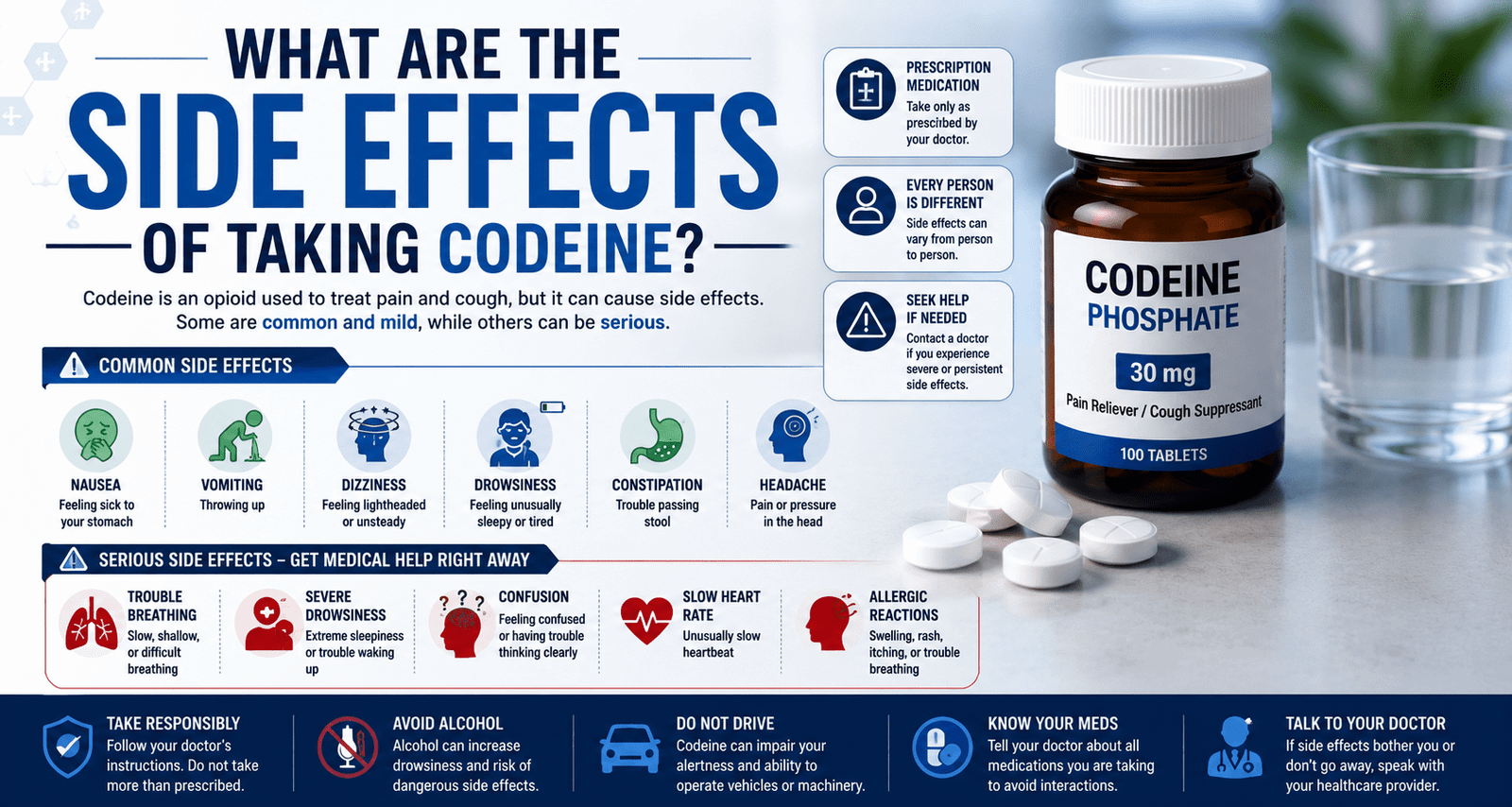
Codeine is an opioid medication used to relieve certain types of pain and, in some formulations, to suppress coughing. Like other opioid medicines, codeine can cause side effects ranging from mild symptoms such as drowsiness and constipation to serious problems such as slowed breathing, overdose, dependence, and addiction.
The severity of codeine side effects can vary depending on the dose, the individual’s response to the medication, other medicines being taken, and factors such as age and overall health. Codeine is also metabolized differently from person to person, which can make its effects less predictable.
What Are the Most Common Side Effects of Codeine?
The most frequently reported side effects associated with codeine include:
- Drowsiness or sleepiness
- Dizziness or lightheadedness
- Nausea
- Vomiting
- Constipation
- Sweating
- Sedation
- Abdominal discomfort
- Headache
- Weakness or fatigue
- Itching
- Dry mouth
These effects occur because codeine acts on opioid receptors in the central nervous system. Its effects can slow certain body functions, including gastrointestinal movement and, at higher exposures, breathing.
Official prescribing information identifies drowsiness, dizziness, sedation, nausea, vomiting, sweating, constipation, and shortness of breath among commonly observed adverse reactions.
Can Codeine Cause Serious Side Effects?
Yes. Although many side effects are relatively mild, codeine can cause serious or potentially life-threatening reactions.
The most important serious risk is respiratory depression, meaning breathing becomes unusually slow or shallow. Severe respiratory depression can progress to respiratory arrest and death. The risk can increase after starting treatment, increasing the dose, or combining codeine with other substances that depress the central nervous system.
Other potentially serious reactions can include:
- Severe sedation or inability to stay awake
- Very slow or shallow breathing
- Low blood pressure
- Confusion
- Severe allergic reactions
- Circulatory depression
- Respiratory arrest
- Physical dependence
- Addiction, abuse, or misuse
- Overdose
Someone who is difficult to wake, has very slow or irregular breathing, or appears to have lost consciousness after taking codeine requires emergency medical attention.
Codeine Phosphate 15 mg vs. Codeine Phosphate 30 mg
One important distinction when discussing codeine is the difference between 15 mg and 30 mg strengths.
A 15 mg codeine tablet contains 15 mg of codeine, while a 30 mg tablet contains 30 mg. Therefore, 30 mg contains twice as much codeine as 15 mg. Approved codeine sulfate tablets, for example, are available in both 15 mg and 30 mg strengths; codeine phosphate is also available in these strengths in some products and markets.
For combination products containing acetaminophen and codeine phosphate, the distinction is particularly important. Some products contain 300 mg acetaminophen/15 mg codeine, while others contain 300 mg acetaminophen/30 mg codeine. In these products, the amount of acetaminophen remains the same while the codeine component doubles.
| Feature | Codeine Phosphate 15 mg | Codeine Phosphate 30 mg |
|---|---|---|
| Codeine amount | 15 mg | 30 mg |
| Relative codeine amount | Lower | Twice the 15 mg strength |
| Potential opioid effects | Generally less exposure | Greater exposure |
| Risk of dose-related side effects | Lower than a comparable 30 mg dose | Higher than a comparable 15 mg dose |
| Appropriate dose | Determined by a healthcare professional | Determined by a healthcare professional |
The difference is not simply that the 30 mg tablet is “better” or necessarily provides twice the pain relief. Opioid response varies between individuals, and increasing the amount can also increase adverse effects. Current U.S. prescribing information recommends starting at the lowest dose necessary to achieve adequate pain relief and adjusting treatment according to the patient’s response.
Important: Patients should not switch from 15 mg to 30 mg, take additional tablets, or change the prescribed schedule without medical advice.
Does a Higher Codeine Dose Mean More Side Effects?
Generally, codeine-related adverse effects can become more likely or more severe as exposure increases. This is particularly important with opioid effects such as sedation and respiratory depression.
However, there is no simple rule that everyone will experience exactly twice the side effects after taking twice the dose. Individual metabolism, tolerance, other medications, age, and medical conditions can substantially affect how someone responds.
Codeine is converted partly into morphine in the body. Genetic differences in the enzyme responsible for this conversion can cause some people to produce morphine more rapidly or slowly than others. This is one reason codeine can have unpredictable effects in certain individuals.
Codeine and the Risk of Dependence and Addiction
Codeine is an opioid and can cause physical dependence, tolerance, and addiction.
Physical dependence means the body has adapted to the medication, so suddenly stopping it after regular use can produce withdrawal symptoms. Dependence is not necessarily the same as addiction.
Addiction, or opioid use disorder, involves problematic use characterized by impaired control over use, compulsive use, continued use despite harm, and other symptoms.
The FDA-approved prescribing information carries warnings about addiction, abuse, misuse, overdose, and potentially fatal respiratory depression. It also advises against abruptly discontinuing codeine in patients who have become physically dependent because rapid reduction can cause withdrawal symptoms.
What Should You Avoid While Taking Codeine?
Codeine can interact dangerously with other substances that cause sedation or suppress breathing. Combining opioids with certain central nervous system depressants can increase the risk of profound sedation, respiratory depression, coma, and death.
Patients should tell their healthcare professional about all prescription medicines, over-the-counter medicines, supplements, and substances they use before taking codeine.
Alcohol and sedating medications can be particularly concerning when combined with opioids. People should follow their prescriber’s instructions and medication labeling rather than assuming that a combination is safe.
Who Should Be Especially Careful With Codeine?
Codeine requires particular caution in some populations. U.S. labeling contraindicates codeine sulfate in children younger than 12 years and specifically prohibits postoperative use in patients younger than 18 following tonsillectomy and/or adenoidectomy.
Older adults and people with certain respiratory, kidney, liver, or other medical conditions may also require individualized medical assessment.
Breastfeeding is another situation requiring medical advice because codeine and its metabolites can pass into breast milk, and unusually high exposure to morphine can pose a serious risk to an infant.
When Should You Seek Emergency Help?
Emergency medical attention is appropriate if someone taking codeine develops signs of a potentially life-threatening reaction, especially:
- Extremely slow, shallow, or stopped breathing
- Inability to wake or severe unresponsiveness
- Blue, gray, or pale lips or skin
- Severe confusion or loss of consciousness
- Suspected opioid overdose
- Severe allergic reaction with difficulty breathing or swelling
If an opioid overdose is suspected, emergency services should be contacted immediately. Naloxone is an opioid overdose reversal medication and may be recommended or prescribed for people at increased risk of opioid overdose.
Frequently Asked Questions About Codeine Side Effects
What are the most common side effects of codeine?
The most common side effects include drowsiness, dizziness, sedation, nausea, vomiting, sweating, constipation, and shortness of breath.
Is codeine 30 mg stronger than codeine 15 mg?
Yes. A 30 mg codeine tablet contains twice the amount of codeine as a 15 mg tablet. However, the appropriate strength depends on the individual and the prescribed treatment plan.
Does codeine 30 mg cause more side effects than 15 mg?
A higher amount of codeine can increase opioid exposure and may increase the likelihood or severity of dose-related adverse effects. However, individual responses vary.
Can codeine cause breathing problems?
Yes. Codeine can cause respiratory depression, which may become life-threatening. The risk is particularly important with excessive opioid exposure or combinations with other central nervous system depressants.
Can codeine cause constipation?
Yes. Constipation is one of the commonly reported adverse effects of codeine and other opioid medicines.
Can codeine cause addiction?
Yes. Codeine is an opioid with recognized risks of addiction, abuse, misuse, and physical dependence.
Can you stop codeine suddenly?
People who have become physically dependent on codeine should not abruptly stop treatment without medical guidance. A healthcare professional may recommend gradually reducing the dose to reduce withdrawal symptoms.
Key Takeaway
Codeine can cause common side effects such as drowsiness, dizziness, nausea, vomiting, constipation, sweating, and sedation, but it can also cause serious respiratory depression, overdose, dependence, and addiction. Codeine phosphate 30 mg contains twice as much codeine as codeine phosphate 15 mg, so the higher strength can produce greater opioid exposure and potentially greater dose-related risks.
Codeine should be used exactly as prescribed. The correct strength and dosing schedule depend on the individual’s medical circumstances, response to treatment, and other medications or substances they may be using.
This article is for educational purposes and is not a substitute for individualized medical advice. For questions about a prescribed codeine product, consult a physician or pharmacist. In an emergency or suspected overdose, seek emergency medical assistance immediately.
Explore Related Topics About Codeine
Want to learn more about codeine? Explore our related guides covering codeine detection times, side effects, dosage, drug interactions, safety precautions, and other important topics to help you make informed decisions about your health.
How Long Does Codeine Take to Work for Pain?
Does Codeine Show Up the Same as Heroin on Drug Tests?
Can You Take Codeine While Pregnant?
Can Codeine Painkillers Be Addictive?
Why Did My Doctor Recommend Codeine Instead of Other Pain Relief?
Is It Illegal to Buy Codeine Painkillers Online in Europe?
Can You Drink Alcohol While Taking Codeine?
What Should You Tell Your Employer About Codeine Use?
How Do You Know If You’re Taking Too Much Codeine?
Why Do Some Painkillers Contain Codeine and Others Don’t?
Can You Buy Codeine Without a Prescription Anywhere?
Can Codeine Cause False Positive Drug Tests?
What Should You Know Before Your First Codeine Dose?
How Long Does Codeine Stay in Your System? Detection Times
Is Codeine Prescription or Over-the-Counter?
What Does Codeine Do to Your Body?
Can Codeine Painkillers Affect Your Ability to Drive?
Can You Become Addicted to Codeine Painkillers?
Why Is Codeine in My Painkillers?
Understanding Ibuprofen and Codeine
Can You Take Codeine With Paracetamol?
Can You Travel with Codeine Medication Across Borders?


